
Society for Threatened Peoples (STP)

For Human Rights. Worldwide.

Every day, people around the world are displaced, persecuted or killed because of their identity, religion or culture.

The Society for Threatened Peoples (STP) is an international human rights organization based in Germany. Since almost 60 years, we are working to protect ethnic, religious and linguistic minorities, nationalities and Indigenous Peoples whose rights are threatened.

Together with affected communities and partner organizations worldwide, we document human rights violations, raise international awareness and advocate for political action.Our goal is clear:

A world in which human rights apply to everyone – regardless of origin, culture or belief.

News and Press Releases

Here you can find English translations of our press releases and statements on current human rights developments worldwide.

They provide insights into our work and into the situations faced by minorities and Indigenous Peoples in various regions.

Syria: Kobanê, the symbol of hope, is once again under threat from Islamists

“The genocidal attacks by the Islamist regime in Damascus on the Kurdish areas in northeastern Syria continue. Tens of thousands of Kurds are fleeing. Entire cities and regions are surrounded and cut off from the outside world, so that no medicine, food, or fuel can be brought in,” reports Dr. Kamal Sido, Middle East consultant at the Society for Threatened Peoples (STP).

More

Islamist violence in Syria

After troops of the new Islamist regime in Syria took control of large parts of northeastern Syria, the Kurds and other minorities living there are not the only ones facing a deadly threat. Yazidis in the neighboring Sinjar region (Shingal) in northwestern Iraq are also at risk, warns the Society for Threatened Peoples (STP).

More

Signing of the Mercosur Agreement (January 17)

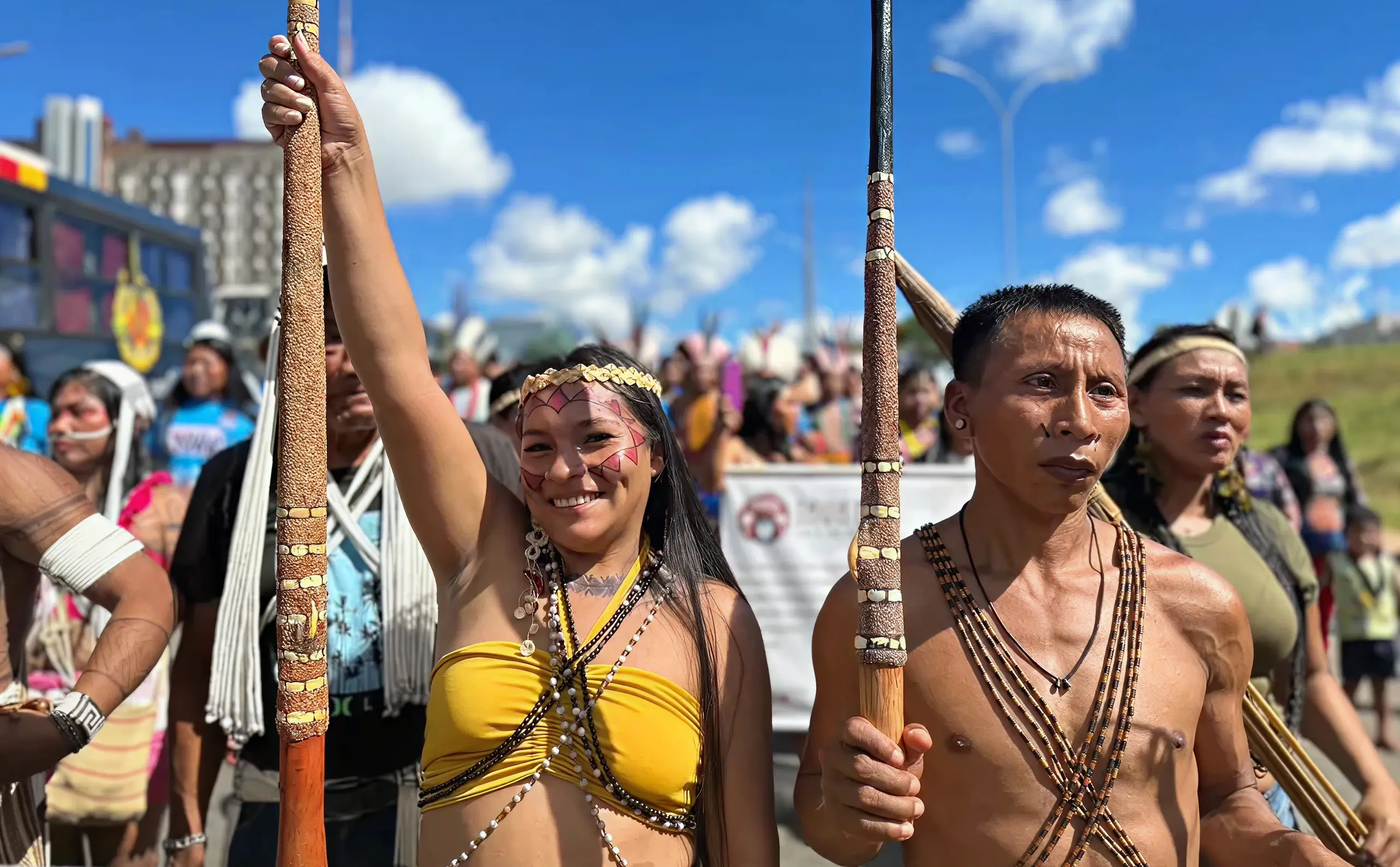
According to the Society for Threatened Peoples (STP), the EU-Mercosur Agreement, which is to be signed on Saturday (January 17), poses a threat to human rights and the livelihoods of indigenous communities.

More

Demonstrations against Syrian leader’s visit to Berlin (January 19 & 20)

To protest against the visit of Syrian leader Ahmed al-Sharaa to Berlin, the Society for Threatened Peoples (STP) and the Kurdish Community of Germany will hold a vigil in front of the Federal Chancellery in Berlin on Monday, January 19, 2026. It will take place from 12:30 p.m. to 3 p.m.

More

Syria’s ruler in Berlin

The Society for Threatened Peoples (STP) urgently appeals to the German government to disinvite Syrian ruler Ahmed al-Sharaa. He is scheduled to visit Berlin on January 19, 2026. “We urge you not to roll out the red carpet in Berlin for a war criminal who is responsible for the murder of innocent people in Syria,” the STP emphasizes in a letter to German Chancellor Friedrich Merz.

More

Protests in Bolivia

The Society for Threatened Peoples (STP) welcomes the Bolivian government’s decision to revise its controversial economic policy package and repeal the corresponding decree. The decision was preceded by weeks of protests by social organizations, trade unions, and indigenous actors led by the COB trade union federation.

More

New atrocities against the Kurds in Syria

The Society for Threatened Peoples (STP) calls on the German government to condemn the atrocities committed against Kurds in Aleppo by the Syrian regime.

More

EU-Mercosur agreement

In an unprecedented move, a qualified majority of EU member states today approved the controversial trade agreement between the EU and Mercosur. Never before in European trade history has a trade agreement been adopted by the EU Council without the approval of such large countries as France or Poland. This approach is likely to further fuel anti-European sentiment, especially since this is a highly controversial agreement. For 25 years, it has been met with resistance from civil society groups, farmers’ associations, and trade unions.

More

Severe attacks on Kurds in Aleppo

Since yesterday, Wednesday, the Islamist regime in Damascus has been attacking two districts of the northern Syrian city of Aleppo. This is reported by the Society for Threatened Peoples (STP), citing local sources. According to these sources, the districts of Sheikh Maksud and Ashafiye are being shelled with heavy artillery, tanks, rocket launchers, and combat drones. Meanwhile, 300 houses in these Kurdish-inhabited neighborhoods of Aleppo have been destroyed.

More

What We Do

Our work focuses on strengthening marginalized communities whose voices are often overlooked in international politics and media.

Our approach:

Documenting Human Rights Violations

We investigate and document human rights violations against minorities and Indigenous Peoples, and bring these cases to the attention of governments, international organizations, and the public.

International Advocacy

We advocate for threatened communities in political institutions, including the United Nations and European institutions.

Public Awareness and Campaigns

Through reports, media outreach, campaigns and events we inform the public and mobilize support for human rights.

Partnerships with Affected Communities

Our work is based on close cooperation with local activists, representatives of minorities and civil society organizations worldwide.

An International Voice for Minorities

The Society for Threatened Peoples is based in Germany but is active worldwide. We collaborate with partners and communities in many regions, including:

  • Africa
  • Middle East
  • Asia
  • Europe
  • Latin America

Our advocacy work for human rights is internationally recognized.
The United Nations has granted the Society for Threatened Peoples consultative status with the UN Economic and Social Council (ECOSOC)

This role enables us to bring the voices of threatened communities directly into international forums and political decision-making processes.

About the Society for Threatened Peoples

Founded in 1968, the Society for Threatened Peoples emerged from civil society protests against genocide and crimes against minorities.

Today, we remain committed to the same principles and values:

Human rights are indivisible.

Every person is entitled to dignity, freedom, and security – regardless of origin, religion, or identity.

Solidarity and partnership.

We work alongside those affected on an equal footing – for self-determination, not representation.

Independence and credibility.

We act on the basis of facts and without political or economic ties.

Accountability and transparency.

We handle donations and trust with care.

Our vision is a world where human rights apply to everyone, diversity is respected, and justice is upheld.