
Society for Threatened Peoples (STP)

For Human Rights. Worldwide.

Every day, people around the world are displaced, persecuted or killed because of their identity, religion or culture.

The Society for Threatened Peoples (STP) is an international human rights organization based in Germany. Since almost 60 years, we are working to protect ethnic, religious and linguistic minorities, nationalities and Indigenous Peoples whose rights are threatened.

Together with affected communities and partner organizations worldwide, we document human rights violations, raise international awareness and advocate for political action.Our goal is clear:

A world in which human rights apply to everyone – regardless of origin, culture or belief.

News and Press Releases

Here you can find English translations of our press releases and statements on current human rights developments worldwide.

They provide insights into our work and into the situations faced by minorities and Indigenous Peoples in various regions.

Resignation of Christian Schmidt in Bosnia and Herzegovina

The Society for Threatened Peoples (STP) views the announced resignation of the High Representative for Bosnia and Herzegovina, Christian Schmidt, as an alarming signal for the country’s stability and for the credibility of the international communit.

More

Niwano Peace Prize Awarded to Asháninka Leader Benki Piyãko

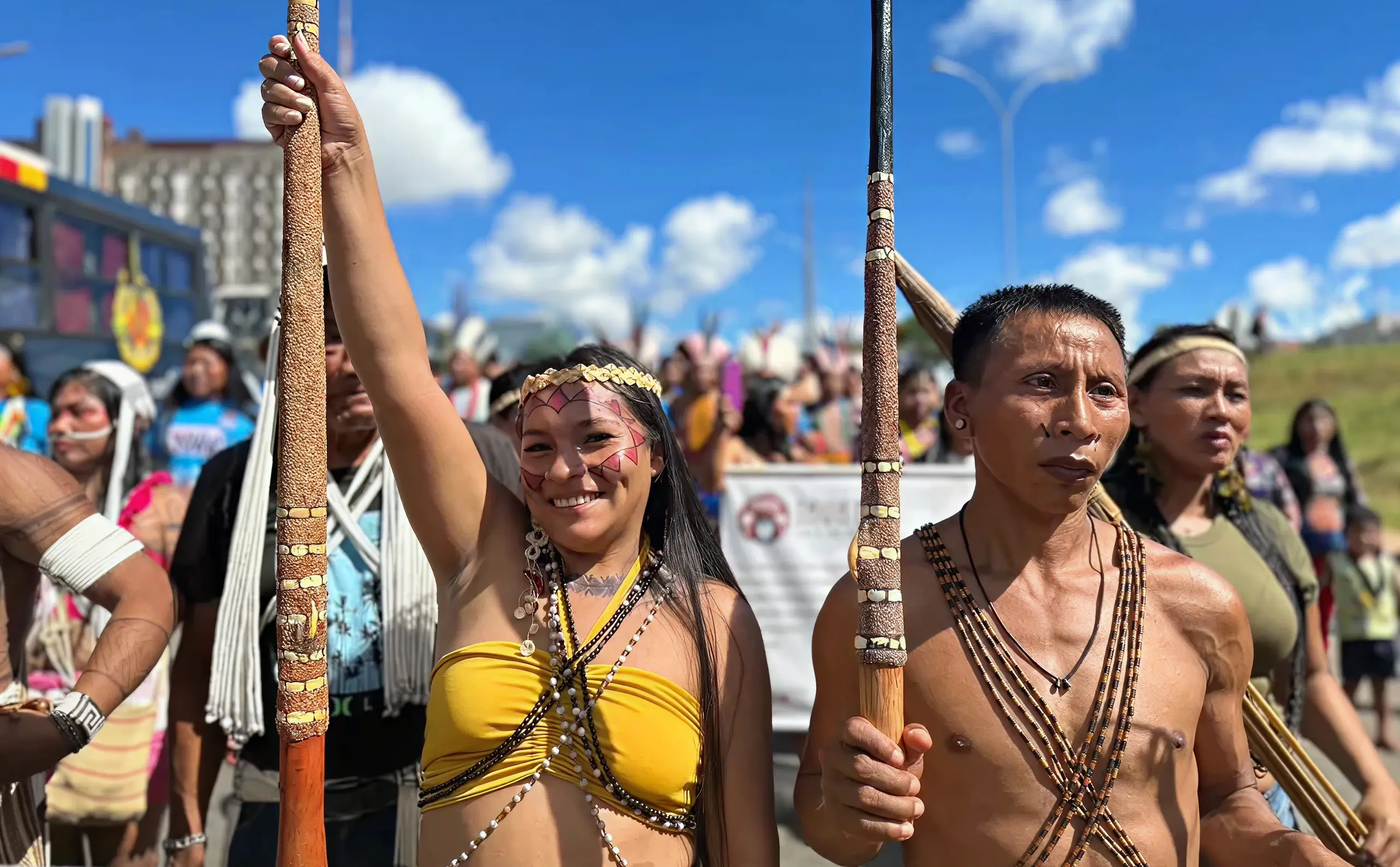
The Society for Threatened Peoples (STP) welcomes the awarding of the 43rd Niwano Peace Prize to its long-time friend and partner Benki Piyãko, recipient of the Weimar Human Rights Prize. The indigenous leader of the Asháninka people in Brazil’s Amazon region will be honored today in Tokyo for his commitment to the protection of land, culture, and the environment, as well as for his pioneering work in reforestation and environmental conservation.

More

EnBW Annual General Meeting (May 7)

While EnBW Energie Baden-Württemberg AG (EnBW) plans to approve dividends totaling 551 million euros at its Annual General Meeting, to be held online tomorrow, May 7, the indigenous Wayúu people in La Guajira are suffering from the consequences of coal mining in Colombia, which has made these profits possible.

More

EU Parliament Condemns China’s Assimilation Policy

The Society for Threatened Peoples (STP) welcomes the European Parliament’s resolution on China’s new law on “Promoting Ethnic Unity and Progress.” In it, the Parliament clearly states that the Chinese Communist Party (CCP) is thereby intensifying its assimilation policy toward ethnic minorities and restricting cultural, religious, and linguistic rights.

More

EU-Mercosur Agreement

The European Commission and the four Mercosur countries—Argentina, Brazil, Uruguay, and Paraguay—will begin applying the controversial EU-Mercosur Agreement on May 1, 2026.

More

Bayer Annual General Meeting (April 24)

At Bayer’s Annual General Meeting on April 24, the Society for Threatened Peoples (STP) called on the Bayer Group to take responsibility for the danger posed to Indigenous Peoples by pesticides banned in the EU and to stop exporting these pesticides.

More

Anniversary of the Armenian Genocide (April 24)

Anlässlich des 111. Jahrestages des Beginns des Völkermords an den Armeniern im Osmanischen Reich am 24. April wenden sich die Gesellschaft für bedrohte Völker (GfbV), die Arbeitsgruppe Anerkennung – Gegen Genozid, für Völkerverständigung (AGA) und der Zentralrat der Armenier in Deutschland (ZAD) mit einem dringenden Appell an Bundeskanzler Friedrich Merz und Außenminister Johann Wadephul.

More

Appeal to Pope Leo

In an open letter to Pope Leo XIV, the Society for Threatened Peoples (STP) has appealed to him to advocate for the clarification of the fate of the two Christian bishops who were kidnapped in Syria on April 22, 2013.

More

Human Rights Action at the Hannover Messe (April 19): Criticism of Partner Country Brazil

Under the slogan “Think Tech Forward – but Indigenous Rights First!”, the Society for Threatened Peoples (STP) is organizing a vigil to mark the opening of the 2026 Hannover Messe. The event will take place on Sunday, April 19, 2026, from 4 to 7 p.m. on the green space northeast of the Hannover Congress Center (HCC). The human rights organization criticizes the fact that this year’s partner country, Brazil, while presenting itself as a pioneer of a “green transformation,” simultaneously disenfranchises Indigenous communities and sacrifices their territories for resource extraction projects.

More

What We Do

Our work focuses on strengthening marginalized communities whose voices are often overlooked in international politics and media.

Our approach:

Documenting Human Rights Violations

We investigate and document human rights violations against minorities and Indigenous Peoples, and bring these cases to the attention of governments, international organizations, and the public.

International Advocacy

We advocate for threatened communities in political institutions, including the United Nations and European institutions.

Public Awareness and Campaigns

Through reports, media outreach, campaigns and events we inform the public and mobilize support for human rights.

Partnerships with Affected Communities

Our work is based on close cooperation with local activists, representatives of minorities and civil society organizations worldwide.

An International Voice for Minorities

The Society for Threatened Peoples is based in Germany but is active worldwide. We collaborate with partners and communities in many regions, including:

  • Africa
  • Middle East
  • Asia
  • Europe
  • Latin America

Our advocacy work for human rights is internationally recognized.
The United Nations has granted the Society for Threatened Peoples consultative status with the UN Economic and Social Council (ECOSOC)

This role enables us to bring the voices of threatened communities directly into international forums and political decision-making processes.

About the Society for Threatened Peoples

Founded in 1968, the Society for Threatened Peoples emerged from civil society protests against genocide and crimes against minorities.

Today, we remain committed to the same principles and values:

Human rights are indivisible.

Every person is entitled to dignity, freedom, and security – regardless of origin, religion, or identity.

Solidarity and partnership.

We work alongside those affected on an equal footing – for self-determination, not representation.

Independence and credibility.

We act on the basis of facts and without political or economic ties.

Accountability and transparency.

We handle donations and trust with care.

Our vision is a world where human rights apply to everyone, diversity is respected, and justice is upheld.